
SHORTLIST · CURATED · DATED
Best CRM Software 2026: 10 Picks (Free to Enterprise)
10 CRMs for small business in 2026 ranked by sales process: pipeline-heavy, email-heavy, service-heavy, or free-tier starter. Real pricing.
Best CRM Software for Small Business (2026)
Tested across agency, solopreneur, and outbound sales workflows. Ranked by how well each tool fits the business model that most needs it.
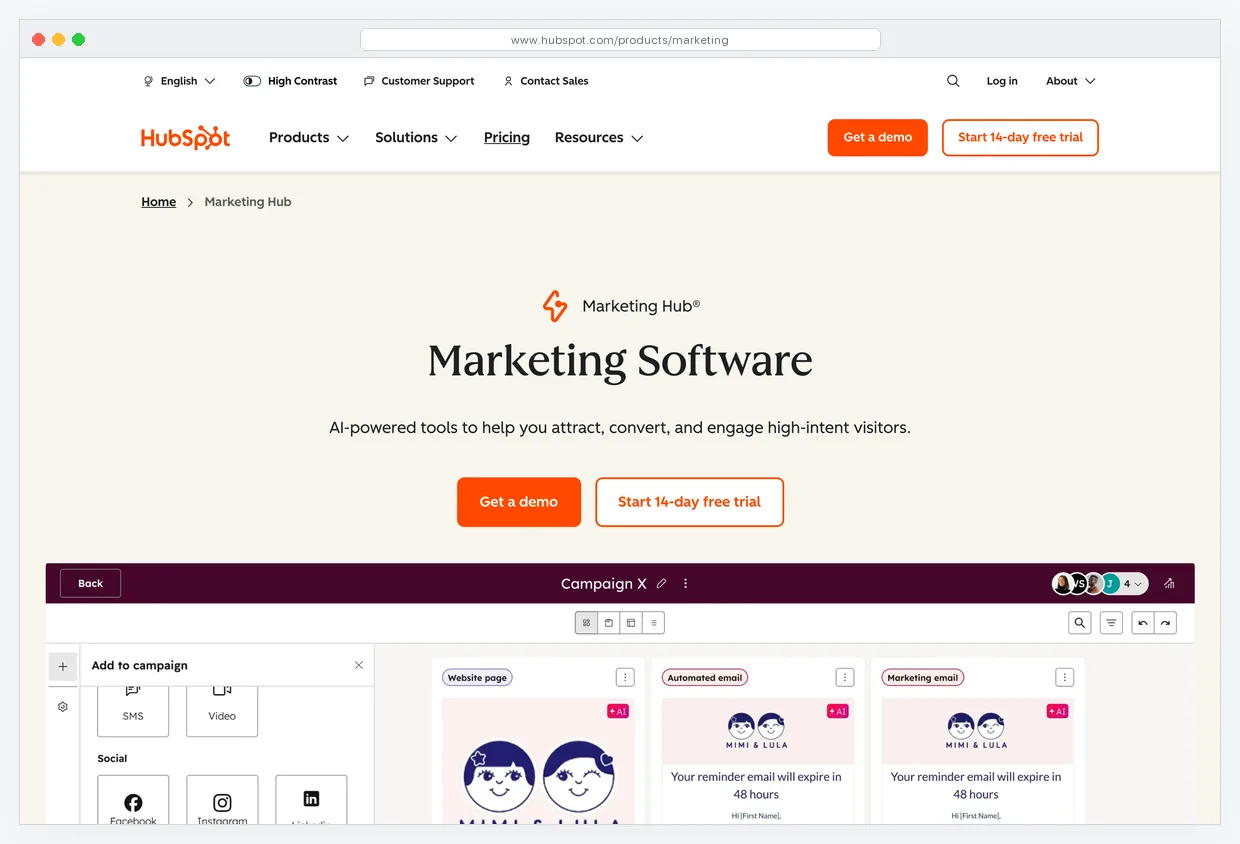
HubSpot CRM
Free / $45/mo • Marketing + Sales Integration Free forever with unlimited users and 1 million contacts. The free tier is genuinely usable, not a stripped demo. Where HubSpot earns its ranking is the upgrade path: when you outgrow the free CRM, marketing automation, email sequences, and custom reporting are all in the same platform. No migration required.
Where it falls short: Free plan has no automation, no sequences, no email tracking. The moment you need those, you are on a $45/mo Hub. Costs compound fast if you add Marketing Hub and Sales Hub separately.

Pipedrive
$14/mo • Visual Pipeline Focus Built specifically for deal tracking. The visual pipeline is the fastest to learn of any CRM at this price point: drag a deal from “Contacted” to “Proposal Sent” in two clicks. Pipedrive keeps everything focused on the next action required to move a deal forward, which is exactly what a sales-driven solopreneur or small team needs.
Where it falls short: No free plan. No marketing automation. If you need email campaigns, you are connecting a separate tool. Not the right choice if client relationships matter more than deal stages.
Zoho CRM
Free / $14/mo • Full-Featured Ecosystem More features per dollar than anything else on this list. Free tier supports 3 users with lead management, a basic workflow rule, and email integration. The $14/mo Standard plan adds scoring, forecasting, and 100 custom reports. Zoho is also part of a 50-app ecosystem: if you already use Zoho Books, Desk, or Campaigns, the integration is built in.
Where it falls short: The interface takes getting used to. Support response times on lower tiers are slow. The ecosystem is an advantage only if you actually use Zoho apps; otherwise it is complexity with no benefit.

Salesforce
From $25/mo (Starter) • Best for: teams of 20+ with complex sales processes The most customisable CRM in existence. Salesforce can model any sales process, any industry, any reporting structure. The Starter plan at $25/mo is usable for small teams, but most of Salesforce's value comes from the Enterprise tier ($165/mo) and above where custom objects, Flow automation, and AppExchange integrations are fully unlocked. Do not start here unless you have someone who knows how to configure it.
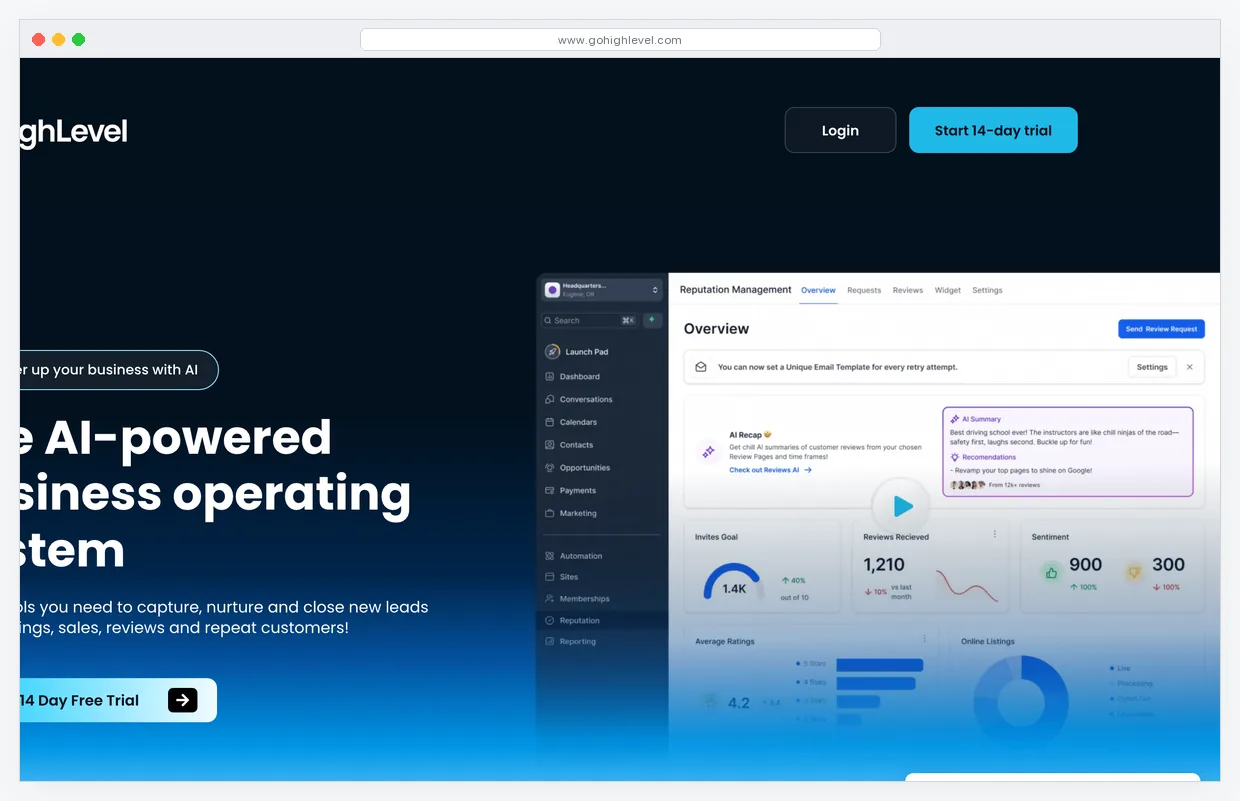

GoHighLevel
$97/mo • Best for: agencies and service businesses managing client pipelines Not a pure CRM. GoHighLevel is an agency operating system: CRM, SMS and email outreach, booking calendar, reputation management, funnel builder, and white-label capability all in one $97/mo subscription. The $297/mo Pro plan lets you resell it as your own branded platform. If you run a marketing agency or client-delivery service business, this replaces 4 to 6 separate tools.
Monday Sales CRM
From $12/mo • Best for: teams already using Monday.com for project management Monday's CRM module sits inside the broader Monday.com Work OS. If your team already uses Monday for project delivery, adding the Sales CRM module keeps clients, projects, and pipelines in one place without a second tool. Standalone, it is a solid but unremarkable pipeline tracker. The value proposition only works if you are already in the Monday ecosystem.

Freshsales
Free / $15/mo • Best for: small teams wanting built-in phone and AI scoring without the HubSpot price Freshsales includes a built-in phone dialer, two-way email sync, and Freddy AI lead scoring on its Growth plan at $15/mo per user. That is a lot of functionality for the price. The free plan is genuinely usable for a single rep: unlimited contacts, basic pipeline, and a built-in chat widget included at no cost. Part of the Freshworks ecosystem (Freshdesk for support, Freshmarketer for email), which is either an advantage or irrelevant depending on your stack.
Close CRM
$49/mo • Best for: outbound sales teams who live on the phone Close is built for one thing: outbound sales at volume. Built-in predictive dialer, SMS, email sequences, and call recording are all included in the base plan. No integrations required for a full outbound stack. Reps can make 50+ calls per day from inside the CRM without leaving the interface. The $49/mo entry price is per user, which gets expensive fast, but for outbound-heavy teams the productivity gain justifies it.

Copper
$29/mo • Best for: teams that run their business inside Google Workspace Copper auto-logs every email, calendar event, and Google Meet from your Gmail inbox with no manual data entry. Contacts, deals, and communication history update automatically as you work. If your entire team operates in Gmail and Google Calendar and the friction of logging CRM activities is what kills adoption of other tools, Copper solves that specific problem cleanly. It does not do much beyond the Google integration.
Insightly
$29/mo • Best for: service businesses that manage projects after the sale Insightly combines a standard CRM pipeline with project management: when a deal closes, it converts directly into a project with tasks, milestones, and team assignments. For consulting firms, agencies, or service businesses where closing the deal is the beginning of a managed delivery process, this removes the handoff friction between sales and operations. It is not the best CRM and not the best project management tool, but it is the best single tool for businesses that need both.
Not sure which CRM fits your workflow?
Paste your website URL and get a personalized recommendation in 30 seconds.
Analyze My Stack →Frequently Asked Questions
Do I actually need a CRM as a solopreneur?
If you have fewer than 30 active contacts to manage, a spreadsheet works. Once you are juggling more than that, or once follow-ups are slipping because you cannot remember where a conversation left off, a CRM pays for itself in recovered deals. Start with HubSpot free. It costs nothing and the friction of adopting it is low enough that you will actually use it.
When should I upgrade from HubSpot free to a paid plan?
When you need email sequences, meeting scheduling inside the CRM, or custom reporting. Those three features are the most common reasons people hit the free plan ceiling. At that point, the $45/mo Sales Hub Starter usually covers what you need. Do not pay for Marketing Hub and Sales Hub simultaneously unless you are actively using both.
Is GoHighLevel worth $97/mo compared to a standalone CRM?
Yes, but only if you run a client-facing service business. GoHighLevel replaces a CRM ($50+/mo), a SMS/calling tool ($30+/mo), a booking calendar ($15+/mo), and a funnel builder ($50+/mo). At $97/mo it is cheaper than the four tools it replaces. If you do not need those tools, it is expensive for what it does as a pure CRM.
What is the best free CRM with no contact limits?
HubSpot CRM. Free forever, unlimited users, up to 1 million contacts. Zoho CRM is free for up to 3 users with no contact limit. Freshsales also has a free tier with unlimited contacts and a built-in chat widget. All three are real, usable platforms on the free plan.
HubSpot vs Pipedrive: which one should I pick?
HubSpot if you want marketing tools alongside your CRM now or in the future. Pipedrive if you want the cleanest, fastest pipeline tracker and have no interest in email campaigns or landing pages from the same tool. HubSpot free is the better starting point for most people since Pipedrive has no free plan. Switch to Pipedrive if HubSpot's interface feels cluttered for a pure sales workflow.