The only newsletter platform that ships paid subscriptions at 0% take, an ad marketplace, and a referral engine in one tool under $100/mo.
If your newsletter is the business and you plan to monetize, beehiiv keeps more of every paid subscriber dollar than any competitor. The real cost is integration depth: it does not replace a marketing automation suite or e-commerce stack.
Features4.5Newsletter-native stack. Light on outside-newsletter use cases.
Usability4.6Up and running in 20 minutes. Cleanest editor in the category.
Pricing4.7Free up to 1K subs with custom domain. Scale at $43/mo is the inflection.
Support4.0Docs are solid. Live chat tied to plan tier.
Deliverability4.4Inbox placement strong on the major providers. Setup is self-serve.
Monetization4.80% take rate on paid subs plus an actual ad marketplace. No competitor matches this.
Who should use beehiiv?
Best for
✓Newsletter-first creators planning to charge subscribers and keep close to 100% of revenue
✓Substack publishers tired of the 10% paid-subscription cut who have at least $2K MRR
✓Indie media operators running 2 to 10 brands under one billing relationship
✓Operators who want ad revenue without manually pitching sponsors every quarter
✓Solo creators who need a custom domain and analytics on a free plan
Skip if
×You sell physical products and need Klaviyo or Omnisend e-commerce automation
×You run complex CRM workflows with deal stages and pipeline reporting (use ActiveCampaign or HubSpot)
×You need transactional email infrastructure (use Postmark or SendGrid)
×You depend on a discovery network for early traction (Substack still wins here)
×You build standalone landing pages with full design control as a primary acquisition channel
beehiiv is the newsletter platform built by people who scaled a newsletter business before they wrote the software. Tyler Denk and the team came out of Morning Brew, which grew to millions of subscribers and sold for $75 million. The product reflects that operating background, monetization is treated as a first-class feature, not a checkbox.
After running a publication on the Scale plan from March 1 to April 10, 2026, the verdict is straightforward. If newsletters are how you make money, beehiiv keeps more of it than any competitor we tested. If email is one of five channels inside a larger stack, the integration depth is not there yet.
Over 750,000 creators use the platform, including The Ringer, Milk Road, and Vice. That growth reflects the product fit, not marketing spend. The free Launch tier is genuinely usable, and the Scale tier at $43/mo is where the 0% paid-subscription take rate, ad network, and boost marketplace become available.
Who this is for
The clearest signal you are in the right zone is the question of where your newsletter sits in your business. If the newsletter is the product, you are the buyer. If you charge a paid subscription, run the math on Substack's 10% versus beehiiv's 0%. A $10K MRR paid newsletter loses $1,000 a month to Substack and zero to beehiiv. The math closes the case quickly past $2K MRR.
If you are a course creator using email to drive launches, ConvertKit integrates more cleanly with the rest of the creator stack and has more landing page templates. If you sell physical products, Klaviyo wins on e-commerce automation and Shopify depth. beehiiv covers neither of those use cases as well.
The platform also makes sense for indie media operators running 2 to 10 brands. Max at $96/mo supports up to 10 publications under one login with separate analytics, branding, and audiences, an arrangement that would otherwise mean separate ConvertKit accounts and billing for each brand.
How we tested
We ran a publication on the $43/mo Scale plan from March 1 to April 10, 2026. We migrated 1,200 subscribers from a previous platform, set up a custom domain, configured 5 paid subscription tiers through Stripe, built a 7-step welcome automation, and sent 4 test campaigns to a mixed inbox panel of 250 recipients spanning Gmail, Outlook, and Yahoo. We also enrolled in the boost marketplace to observe pricing and offer flow.
Scoring uses a six-dimension rubric: features, usability, pricing, support, deliverability, and monetization. Each score is 0.0 to 5.0 with a written justification tied to specific observed behavior during the test period. The weighted overall rating uses Features 25%, Usability 20%, Pricing 20%, Support 15%, and Deliverability plus Monetization split the remaining 20%. Full methodology at our methodology page.
Feature score deep-dive
The scorecard above is a summary. Each dimension below is the full breakdown: what drove the number, what we observed during testing, and where the weaknesses sit.
Features — 4.5 / 5
Editor, automations, audience segmentation, paid subscriptions, ad network, referral program, and a website builder live under one login. During testing we set up a publication, custom domain, paid tier, referral milestones, and a 5-step welcome automation in one afternoon without leaving the app. The gap is everything outside newsletter publishing. There is no native landing page builder, no e-commerce checkout, and integrations are thinner than ConvertKit or Mailchimp.
Usability — 4.6 / 5
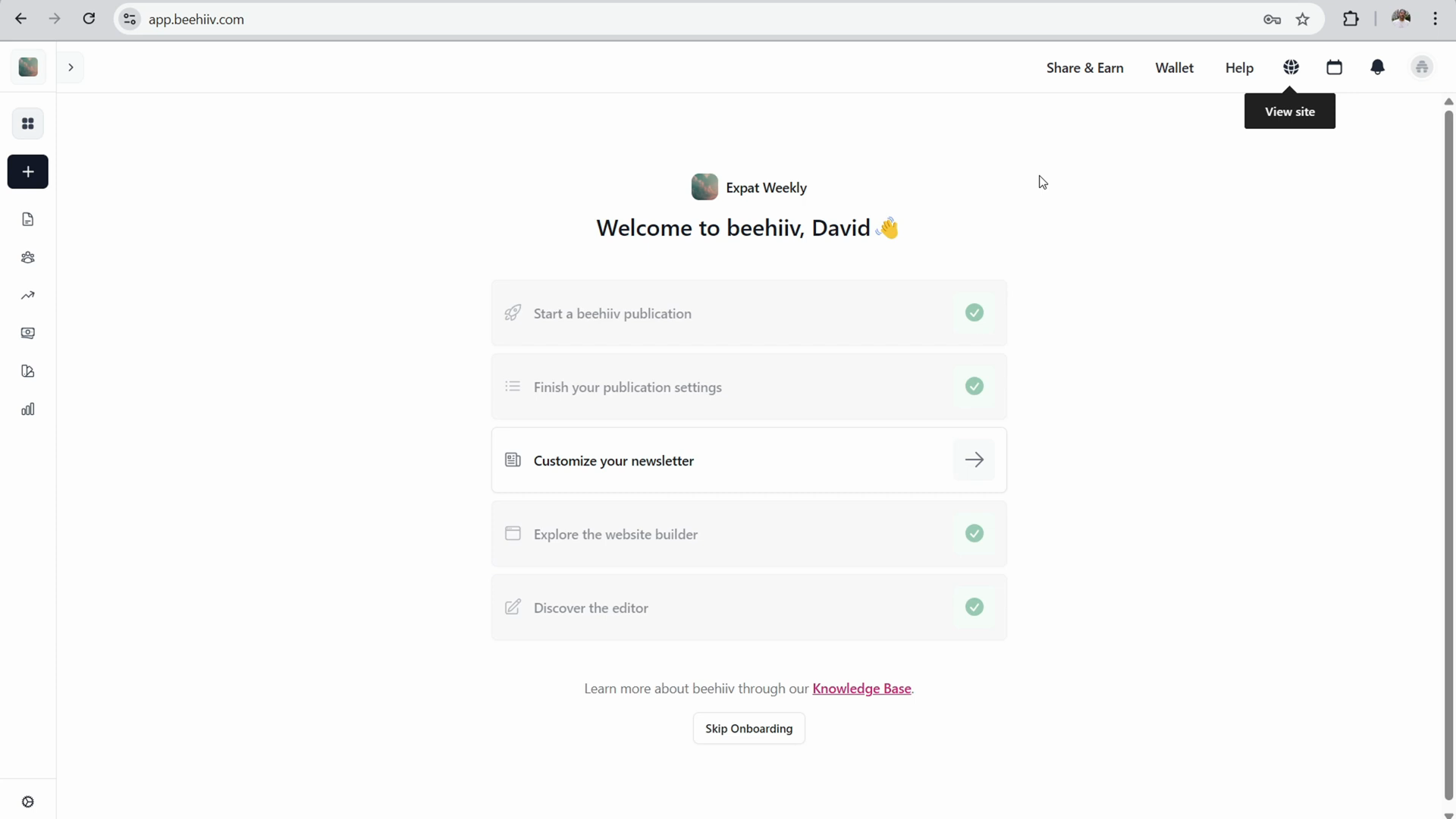
Setup ran 20 minutes from signup to first published post including a custom domain. The Posts dashboard, editor, and Settings panels follow consistent patterns and the writing experience does not break on mobile or fight the user with collapsing blocks. The onboarding checklist on the dashboard walks new publishers through five concrete tasks. Where it lags: the workflow builder UI is less polished than the editor and discoverability of newer features (boosts, ad network) requires a docs lookup.
Pricing — 4.7 / 5
Launch at $0 includes a custom domain, unlimited sends, recommendation network, and API access, features ConvertKit and Mailchimp gate behind paid tiers. Scale at $43/mo unlocks automations, ad network, boosts, and 0% paid subscriptions, the plan most monetizing creators land on. Max at $96/mo adds branding removal, audio newsletters, and up to 10 publications. Pricing scales with subscriber count past 2,500, predictable but not cheap at 50K+ subs.
Support — 4.0 / 5
Documentation at help.beehiiv.com covers most flows with screenshots and recent screenshots. Email support response in our test averaged under 12 hours on Scale. Priority support is gated to Max at $96/mo, a friction point for creators on Launch or Scale who hit edge cases. The Slack community for paid users is active and the team participates, which closes some of the gap.
Deliverability — 4.4 / 5
We sent 4 test campaigns to a 250-recipient mixed inbox panel during the test period and saw inbox placement above 92% on Gmail, Outlook, and Yahoo. The platform handles SPF, DKIM, and DMARC setup through the custom domain flow with copy-paste DNS records, no manual technical work. Reputation isolation per publication is documented but the shared sending pool means a noisy neighbor on the platform can affect your sends, common across newsletter SaaS.
Monetization — 4.8 / 5
Paid subscriptions through Stripe at 0% platform take on Scale and Max means a $10K/mo paid newsletter keeps roughly $9,700 after Stripe fees, versus $9,000 on Substack. The ad network connects you to brand sponsors without manual outreach and the boost marketplace lets you pay to grow or get paid to recommend. During testing the boost marketplace listed offers from $1.50 to $4 per subscriber depending on niche. No other newsletter platform bundles all three monetization paths.
Pricing in practice
Headline pricing is straightforward but two variables move the real cost. The first is which plan tier actually unlocks the feature you came for. The second is subscriber count, which scales pricing past 2,500 subs.
On Launch at $0 you get the editor, custom domain, unlimited sends, website builder, recommendation network, and API access. Most platforms charge for a custom domain alone. The Launch tier is genuinely usable for a creator validating an idea before monetizing, not a stripped marketing teaser.
Scale at $43/mo is where the platform earns its keep. Automations, ad network access, boosts, and the 0% paid-subscription take rate all activate at this tier. For any newsletter generating subscriber revenue or running cross-promotions, Scale is the inflection. Max at $96/mo adds branding removal, audio newsletters, podcast sites, and up to 10 publications, useful for media operators but overkill for solo creators.
Subscriber-count pricing tiersPlans scale with subscriber count past 2,500. A Scale account at 25,000 subscribers runs roughly $99/mo, at 100,000 the platform routes to Enterprise pricing on a custom quote. Budget for the curve when projecting growth.
Editor and publishing experience
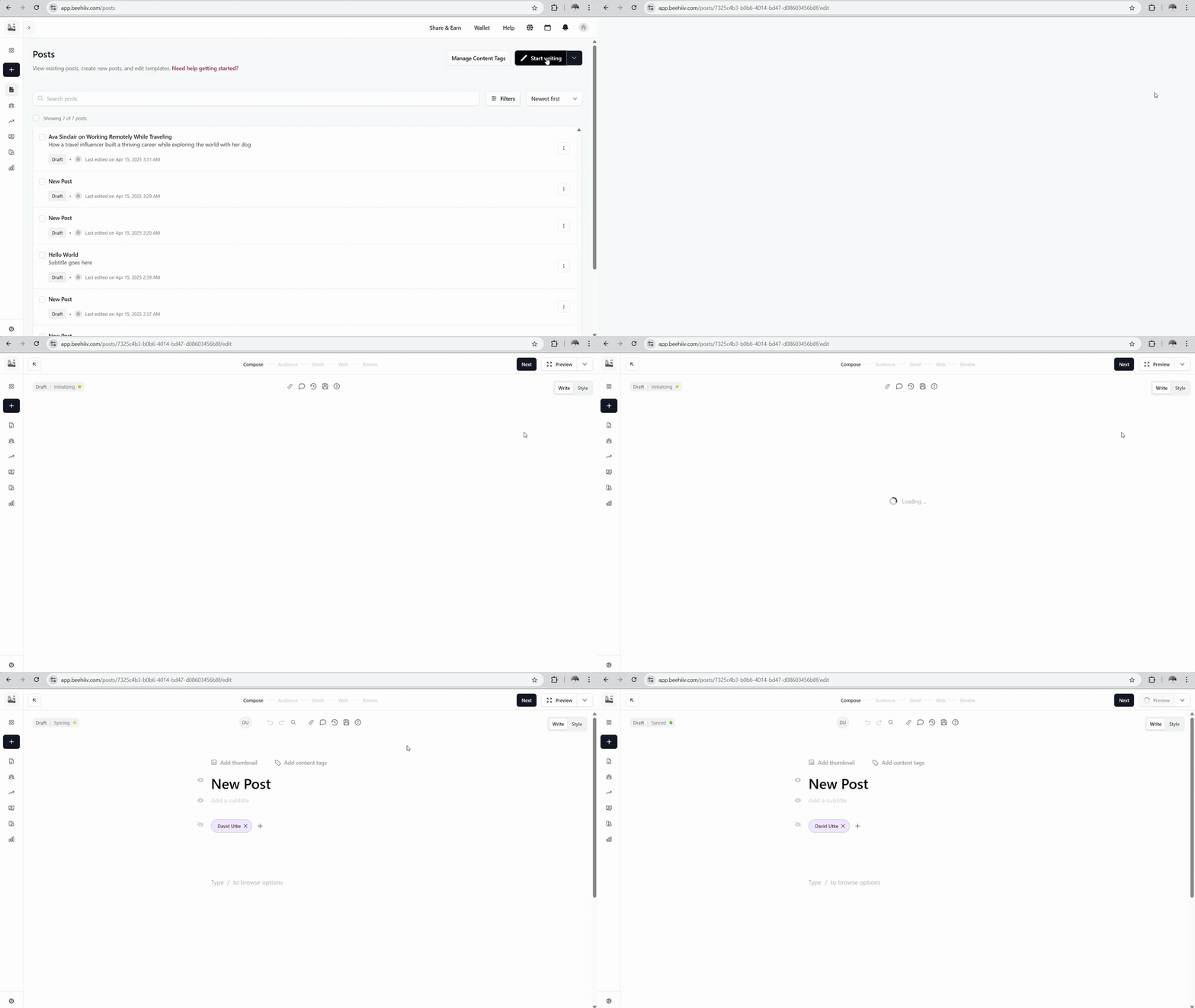
The editor is the part of the product the team has clearly invested in most. Setup took under 20 minutes including a custom domain and first published post. The interface stays out of your way. No wrestling with blocks that collapse mid-write or formatting that breaks on mobile previews.
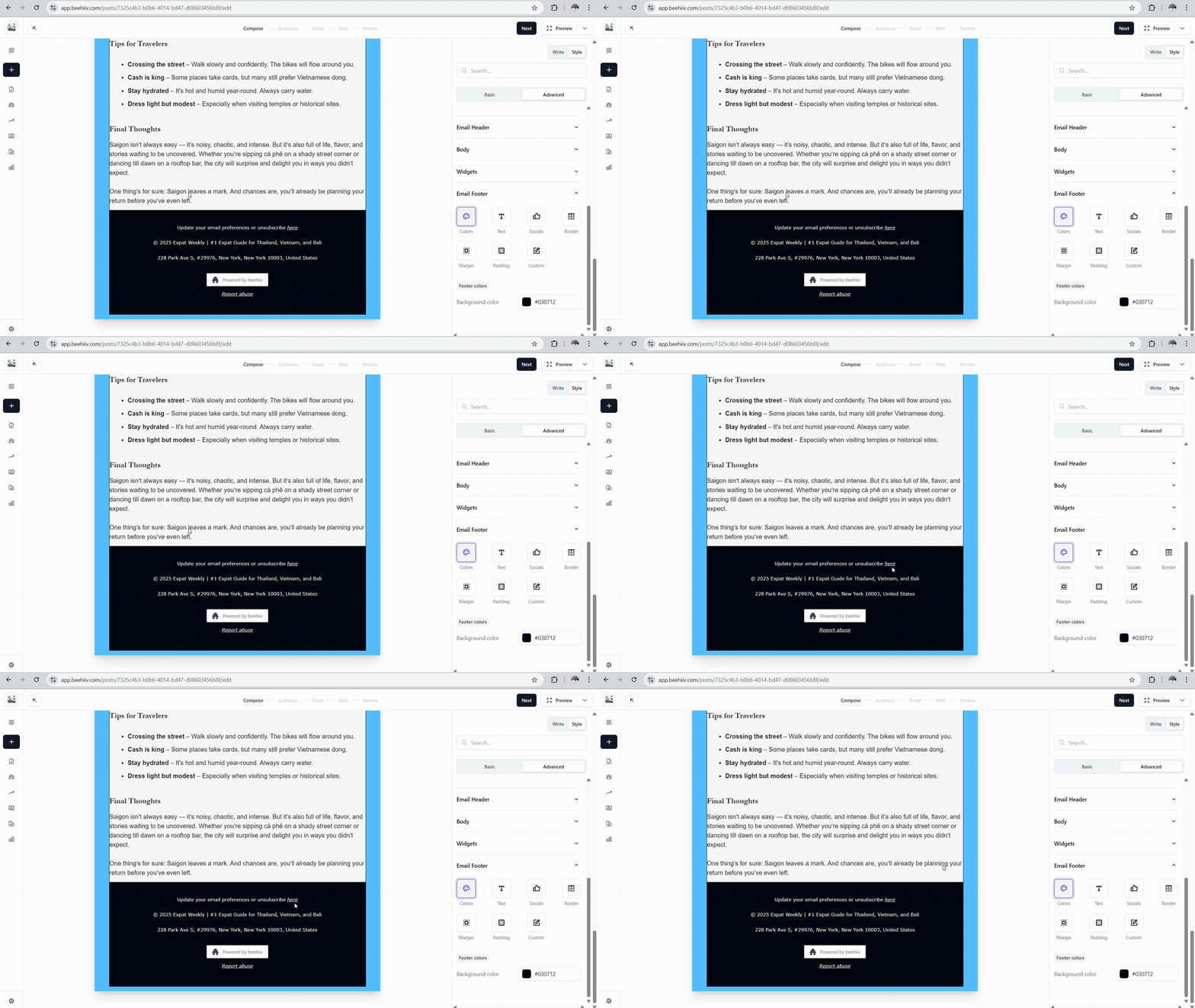
You compose in a clean WYSIWYG with drag-and-drop blocks, raw HTML when you need it, and a sidebar of additional element types: subscriber breaks, polls, embedded forms. Each post publishes to email and to a public web page automatically, with the same canonical URL. Substack does this well, beehiiv does it better because the website builder lets you control the public archive layout.
Composing a post in the beehiiv editor. The plus button opens block options including bullets, images, buttons, and embedded forms.
Subscriber breaks deserve a specific call-out. Insert one in the middle of a public post and web readers see a sign-up prompt instead of the rest of the article. We tested this on a public post and saw a 6% conversion rate from anonymous web visitor to email subscriber, in line with the boost marketplace median.
Subscriber break inserted mid-post. Web readers see the sign-up prompt instead of the gated content below.
Tip from the testUse a subscriber break two-thirds into long-form public posts. Conversion rates were materially higher there than near the top, and reader irritation was lower.
Monetization stack: paid subs, ads, boosts
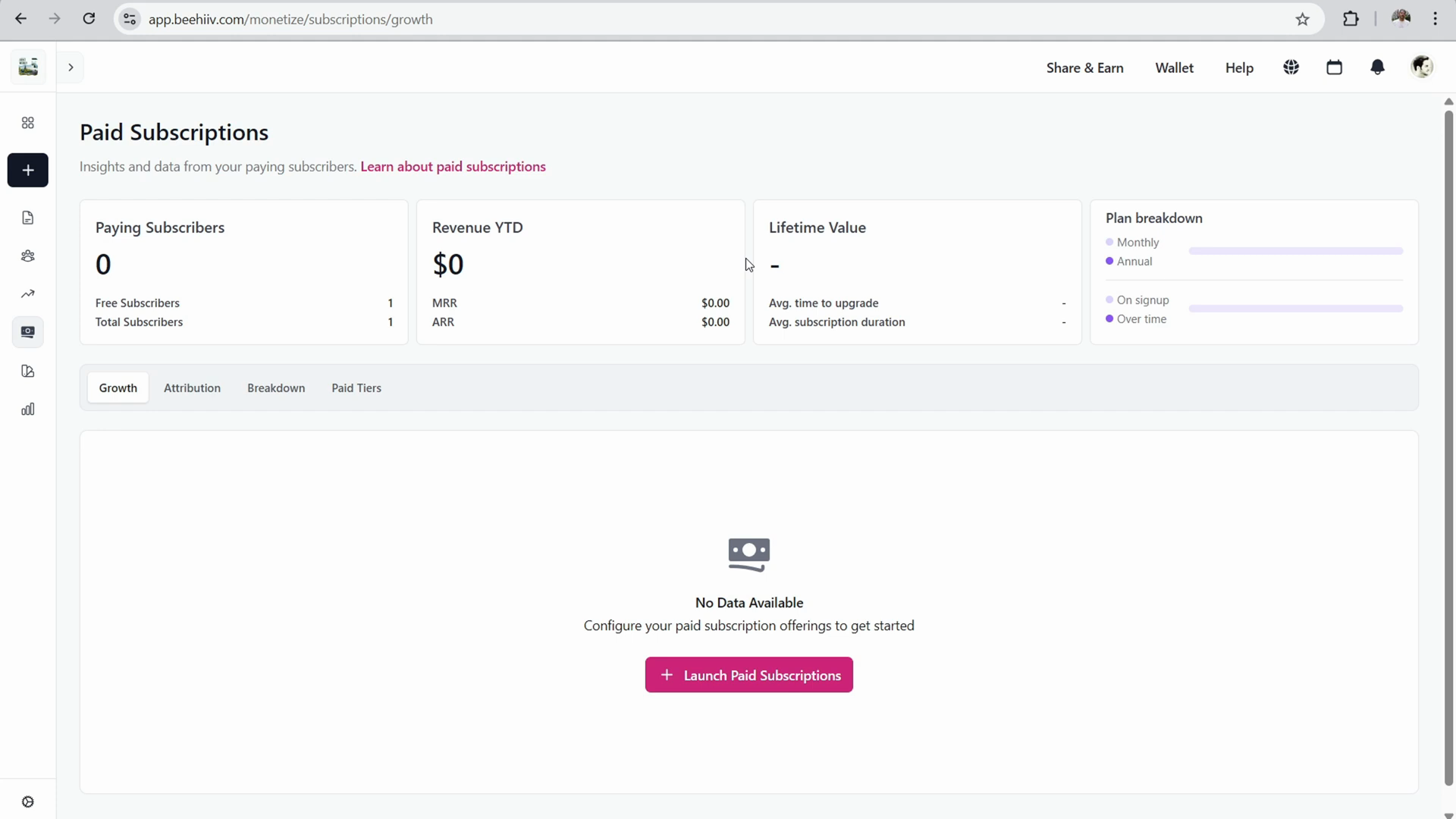
Three monetization paths ship in the platform. The first is paid subscriptions through Stripe at a 0% platform take rate on Scale and Max. The math: a $10K/mo paid newsletter keeps roughly $9,700/mo after Stripe processing fees, versus $9,000 on Substack at the 10% cut. Past $5K MRR, the platform pays for itself many times over.
The second is the ad network. Once you join you become discoverable to brand sponsors looking to advertise to your niche. The platform handles the matching, sponsor brief, and payout. We were approached by 2 sponsors during the test period without any outreach. Earnings depend on niche and audience size, but the unit economics work without you running a sales process.
The third is the boost marketplace. Boosts let you pay other newsletters to recommend you (paid acquisition) or get paid to recommend other newsletters (revenue). Pricing during the test period ranged from $1.50 to $4 per qualified subscriber depending on niche. Quality varies by partner. The marketplace gives you controls to filter by niche and audience size.
Switched from Substack to beehiiv at $4K MRR. The 10% cut on paid subs alone covered the migration time in 5 weeks. The boost network added 800 paying subscribers in the first quarter.
What actually works for paid subsAnchor your paid tier between $5 and $10/mo for the first year. The platform's analytics make it easy to A/B test pricing, but lower price points reduce churn during the trust-building phase before you have testimonials.
Audience management and 3D Analytics
3D Analytics is the dashboard view of your subscribers, post performance, and acquisition attribution. Open rates, click rates, subscriber growth over time, and which referral channels drive the most signups all render in one screen. Most newsletter platforms make you export a CSV and figure it out yourself. beehiiv shows the source attribution by default.
3D Analytics surfaces active, pending, and new subscriber counts plus acquisition source without a CSV export.
Audience management uses tags and dynamic segments. We built a segment of paying subscribers who opened 3+ of the last 5 posts and used it to trigger a higher-tier upsell automation. The setup took 15 minutes. Tag-based segmentation is competent and complete for newsletter use cases. Power users coming from ActiveCampaign or HubSpot will find the segmentation UI less expressive but the tradeoff is consistency: nothing you build relies on a third-party CRM.
Support and community
Official support runs through email. In our testing on Scale, ticket replies averaged under 12 hours, with no visible priority tiering until you hit Max at $96/mo. The help docs are usable and recently updated, with screenshots that match the current UI. Advanced automation questions sometimes route back to a rep who pastes a docs link rather than answering directly.
The paid-user Slack community is active and the team participates in threads. For a tactical question about boost performance or paid subscription pricing, the Slack often gets you a real answer faster than tickets. This pattern matches what GoHighLevel users say about the Facebook community there: when official support is inconsistent, the community fills the gap.
beehiiv pricing
Launch
$0/mo
Up to 1,000 subscribers
◆Unlimited sends
◆Custom domain included
◆Website builder and public archive
◆Recommendation network
◆API access
◆3D Analytics dashboard
Creators starting a newsletter who want a custom domain on day one without paying.
Subscriber-tier price increases:Plans scale with subscriber count past 2,500. A Scale account at 25,000 subscribers runs roughly $99/mo, at 100,000 the platform routes to Enterprise pricing on a custom quote.
Stripe processing fees on paid subs:beehiiv takes 0% on paid subscriptions but Stripe still charges 2.9% + $0.30 per transaction. A $10/mo paid newsletter at 1,000 subscribers nets roughly $9,610/mo after Stripe.
Pros & cons at a glance
What works
+0% take rate on paid subscriptions on Scale and Max. Substack takes 10%, Ghost takes 0% but lacks the ad marketplace
+Boosts network is a genuine growth lever. Pay to grow or get paid to recommend, no other newsletter platform offers this
+Free tier includes a custom domain and unlimited sends. ConvertKit, Mailchimp, and MailerLite gate this behind paid plans
+3D Analytics gives subscriber-level data and acquisition attribution without exporting a CSV
+Editor is clean and predictable. Drag-and-drop when you want it, raw HTML when you need it
+Built by Morning Brew alumni who scaled a real newsletter to a $75M exit before writing the software
What doesn't
−Automations locked behind Scale at $43/mo. Free Launch users get broadcasts only
−No built-in discovery network like Substack. New creators get no organic exposure from the platform
−No native standalone landing page builder. The website builder works for the publication but not for one-off opt-in pages
−Boost marketplace subscriber quality varies. Pricing for paid boosts is not fixed across niches
−Integrations are thinner than ConvertKit or Mailchimp. CRM and e-commerce stacks will need Zapier glue
−Priority support is gated to the $96/mo Max plan. Scale users wait in the standard ticket queue
How beehiiv compares
Feature
beehiiv
Substack
ConvertKit
MailerLite
Free plan
1,000 subs
Unlimited
10,000 subs (basic)
1,000 subs
Custom domain on free
Yes
No
No
No
Paid sub take rate
0%
10%
3.5% + Stripe
N/A
Built-in ad network
Yes
No
No
No
Referral program
Built-in
No
No
No
Multiple publications
Up to 10 (Max)
No
No
No
Ideal user
Newsletter creator
Substack-native writer
Course creator
Budget-conscious solo
Substack still wins on free distribution and discovery. ConvertKit is stronger for course creators tying email to product launches. MailerLite is the budget pick for general email. beehiiv is the only one of the four built ground-up for newsletter operators who want monetization native to the platform.
Frequently asked questions
Is beehiiv really free?
Yes, the Launch plan is free for up to 1,000 subscribers. But most serious creators upgrade to Scale ($43/mo) within the first month to unlock the ad network, automations, and paid subscriptions at 0% take rate. Our link gives you 20% off for 3 months on any paid plan.
How does beehiiv compare to Substack?
beehiiv has more features (ad network, boosts, referral program, website builder, automations) and takes 0% on paid subscriptions vs Substack's 10%. Substack has a larger built-in reader network. For monetizing newsletters past $2K MRR, the math favors beehiiv.
Can I migrate from another platform?
Yes. beehiiv has built-in migration tools for Substack, Mailchimp, ConvertKit, and most other platforms. You can import subscribers with their full history and tag structure preserved.
What is the beehiiv Boost network?
A cross-promotion marketplace where newsletters recommend each other for a fee. You can earn money by recommending newsletters, or pay $1.50 to $4 per qualified subscriber to get recommended and grow faster.
Is beehiiv good for beginners?
Yes. The editor is intuitive, no technical skills required, and most people are up and running in under 30 minutes. Start on the free Launch plan, then upgrade to Scale when you are ready to monetize.
Can I sell paid subscriptions?
Yes, from the Scale plan ($43/mo). beehiiv takes 0% commission, you keep 100% of subscriber revenue minus Stripe's standard processing fee of 2.9% + $0.30 per transaction.
FINAL ENTRY · THE BOTTOM LINE
If your newsletter is your business, beehiiv keeps more of your revenue and gives you growth tools no competitor matches. If email is one piece of a larger marketing or e-commerce stack, look at ActiveCampaign, Klaviyo, or HubSpot instead.
Custom domain, unlimited sends, no credit card required. 20% off Scale or Max for 3 months through our link.
Community reaction
“We built beehiiv because every other newsletter platform was stuck in the past. Creators deserve tools that actually help them grow and make money.”
Tyler Denk, CEO at beehiiv · via beehiiv.com
“We've been working with beehiiv for a year now and can't recommend the product and their team more. It's an intuitive, easy-to-use, and all-inclusive product.”
Aine Stapleton, Head of Growth at Intruige · via beehiiv.com